Chain hoists and wire rope hoists do the same job — lifting and lowering a load — but because the lifting medium differs, each has different strengths. The main criteria are lifting height, lifting speed, capacity and mounting.
Short answer
- Chain hoist: compact, precise lifting in workshops, production lines and warehouses, usually over a few metres of lift.
- Wire rope hoist: long lifting distances and higher lifting speeds, for example lifting materials to upper floors on construction sites.
The key difference
A chain hoist lifts the load with a steel chain and has a compact body. A wire rope hoist winds a steel rope onto a drum, which allows much longer lifting distances, but the drum makes the body longer.
When does a chain hoist stand out?
Chain hoists take up little space under the ceiling thanks to their compact body and are widely used in workshops, assembly lines and warehouses. They come in fixed-suspension, monorail (travelling along a beam) and low-headroom versions. With single or double chain reeving, you can choose between speed and motor power at the same capacity.
When does a wire rope hoist stand out?
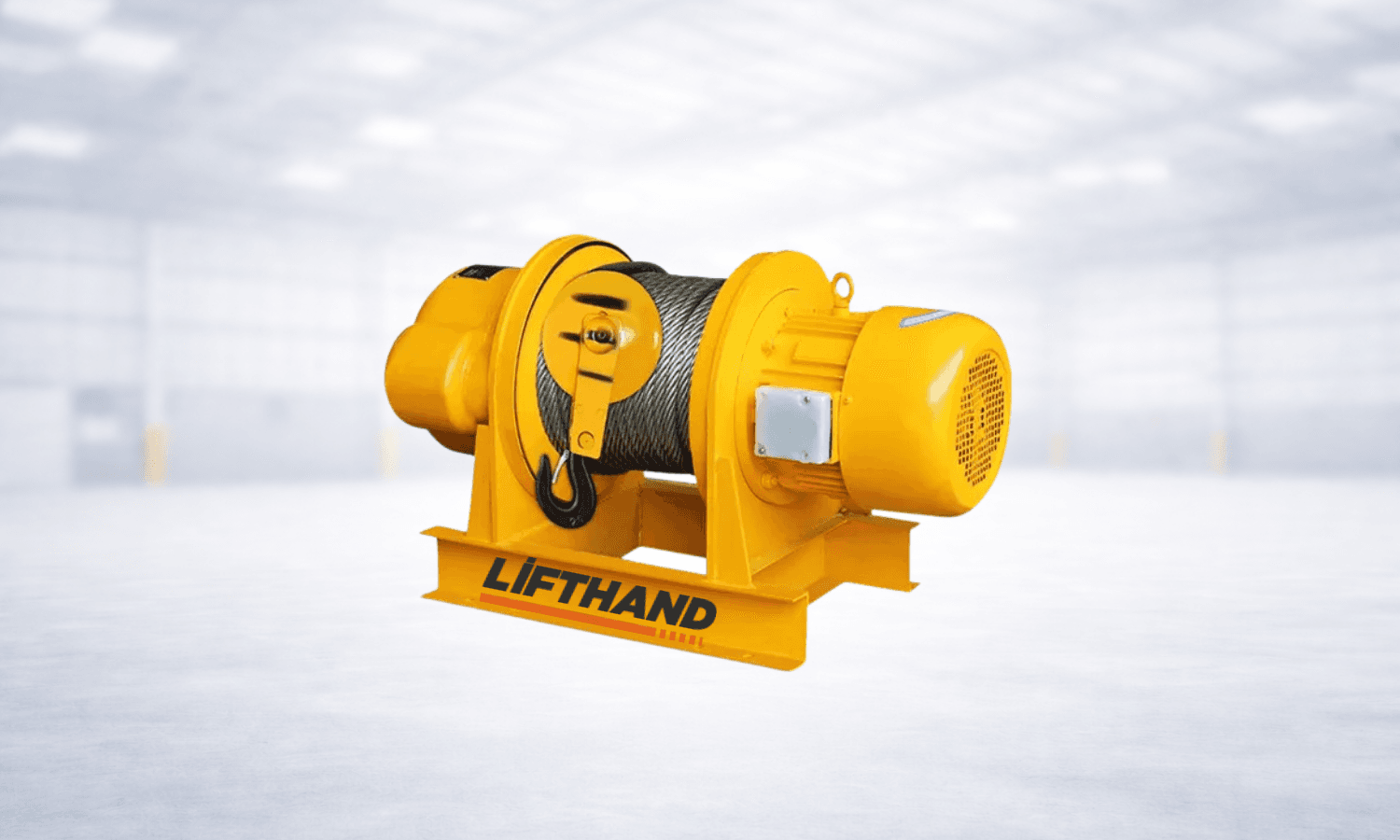
Because the rope winds onto a drum, wire rope hoists make lifting heights of tens of metres practical. LiftHand wire rope hoists come in 220V and 380V versions with different rope lengths; capacity and rope options are listed on the product pages.
Wire rope hoist capacities are often written as two values. The lower value is the load lifted with a single rope line; the higher value is lifted with a double line using a pulley block. A double line doubles the capacity but halves the lifting speed and usable lifting height.
Questions to ask
- How many metres does the load need to be lifted?
- Does lifting speed matter for the workflow?
- Will the hoist work in an enclosed workshop, outdoors or on a construction site?
- Is horizontal travel along a beam needed?
Compare chain hoists, 220V wire rope hoists and 380V wire rope hoists, and request a quote describing your application.