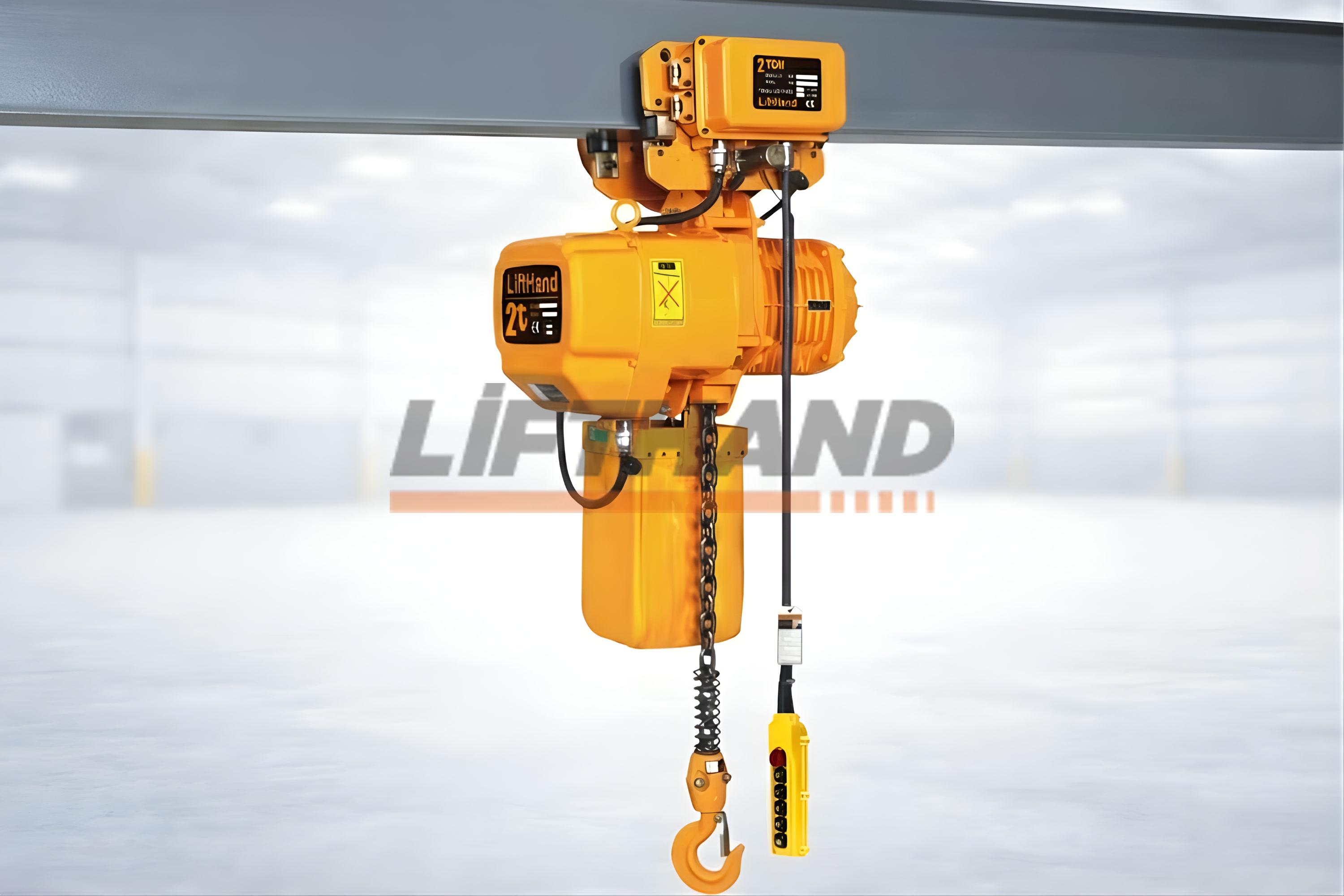
In the LiftHand range you will find two versions of the same hoist at some capacities: single chain and double chain. Both lift the same load; the difference is how the load is shared across the chain, and how that affects speed and motor power.
What does reeving mean?
The “reeving” value in the datasheets shows how many chain falls carry the load. In a single-chain model the load hangs on one fall; in a double-chain model it is shared between two falls via a hook block with a pulley. With two falls, each carries less load, so a thinner chain and a smaller motor are enough — but at the same motor speed the hook rises at half the speed.
What is the difference in practice?
At the same capacity, the single-chain model lifts faster than the double-chain model, but uses a thicker chain and usually a more powerful motor. The double-chain model lifts more slowly but with more control. Speed, motor and chain values for each model are in the datasheet on its product page.
When to choose single chain
- When lifting speed matters to the workflow.
- For greater lifting heights: less total chain is needed for the same height.
When to choose double chain
- When the load should be lifted slowly and under control, for example in precise assembly work.
- When lower motor power is preferred; this can matter where the electrical supply is limited.
Compare fixed-suspension and monorail chain hoists or request a quote.